
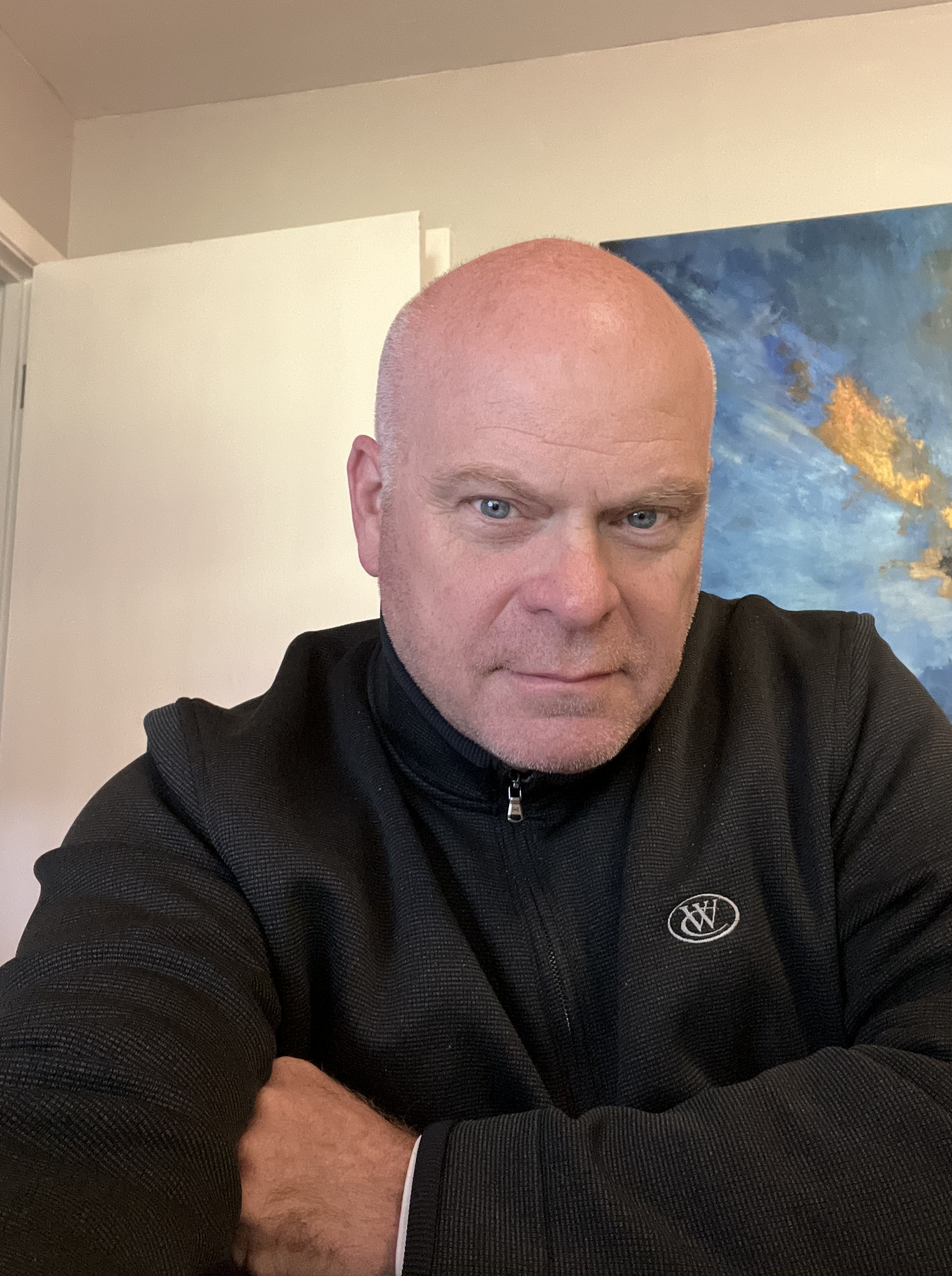
artist troy doyle
Before I had a canvas, I had a DeKalb seed house notepad, a pencil, and a grandmother who recognized the artist in me.
As a child at my grandparents’ farm in Monmouth, Illinois, my grandma, Isabelle, saw how much I loved to create and eventually replaced this makeshift canvas with sketchbooks and nearly every kind of art supply imaginable.
Without realizing it, I was learning to see the world through an artist’s eyes, to notice shape, movement, texture, and beauty in unexpected places. Those childhood sketches eventually evolved into paintings. In high school, my art teacher recognized that instinct and told me, “You know you are an artist when you look at things and think about how to draw them.” Those words stayed with me.
I went on to study fine art, painting, advertising, and design at the American Academy of Art in Chicago, which led to a career in commercial design. Over the years, I’ve created everything from marketing materials and packaging to product labels; although painting remains my passion, my meditation and the place where I feel most alive.
Early in my career as a painter, I focused on architecture, landscapes, and personal commissions, often incorporating meaningful objects and memories into my work. My love of realism eventually led me to explore wine and spirits. Inspired by a lifestyle surrounded by family, food, wine, and neighborhood gatherings, I became fascinated by the challenge of capturing glass, light, color, and atmosphere. These still lifes allowed me to create not just an image, but a mood—something that felt as though a gathering had just taken place or was about to begin. Many of these works were exhibited and sold for years at Scottsdale Fine Art in Scottsdale, Arizona.
Over time, I began searching for more emotion in my work, allowing each painting to unfold as an experience. Watching Gerhard Richter paint with a large squeegee opened my eyes to a different way of creating, one where the tool, the movement of the paint, and the experience of the process could guide what emerged. Rather than telling the viewer exactly what to see, I wanted to leave room for interpretation, emotion, and discovery. Suggestive landscapes and abstract forms began to emerge, opening a new chapter in my artistic journey.
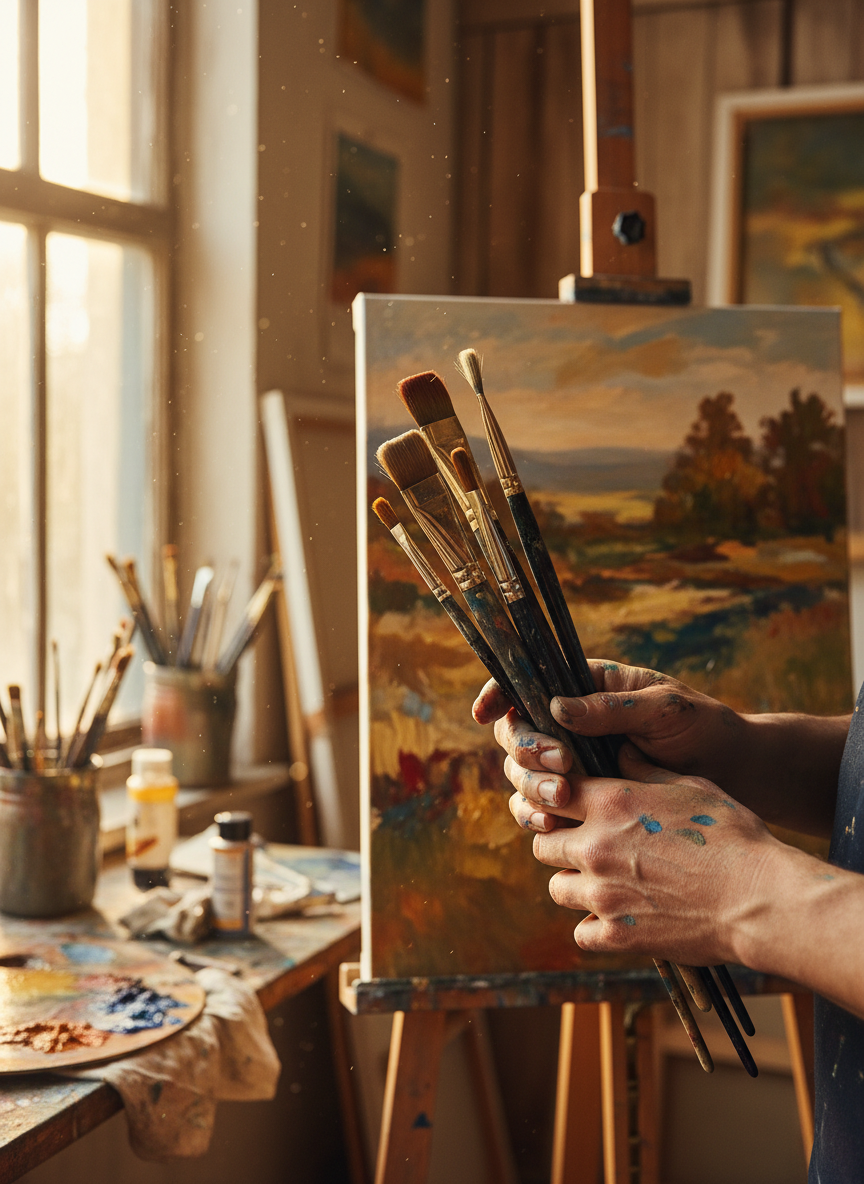
As a professional painter, I’m thrilled by a blank white canvas. It holds endless possibilities, the opportunity to create something that didn’t exist before. The scent of oil paint awakens my senses, much like opening the windows on the first warm day of spring. Music plays quietly in the studio, gradually fading into the background as paint moves across the canvas. Time disappears. I become completely absorbed in the work, lost somewhere between the canvas, the process, and whatever is beginning to emerge.

